


Allergic rhinitis, also known as hay fever, is caused by exposure to certain allergens such as pollen, dust, mold, or flakes of skin from certain animals. It is characterized by the inflammation of the nasal membrane and the patient experiences symptoms like sneezing, nasal congestion, itchy throat, etc.
Visit your doctor if you experience such symptoms and follow the prescribed regimen to reduce the severity and seriousness of the allergy. There can be multiple factors that increase the risk of developing the disease, therefore, to stay away from Allergic Rhinitis protect yourself from the exposure of allergens and religiously follow the other preventive measures as advised by your doctor.
When your body comes in contact with an allergen, it will release a chemical known as histamine, which is the main cause of allergic rhinitis or hay fever. Here is the list of some common allergens
● Dust
● Pollen
● Tiny flecks of skin
● Mold
● Saliva
They usually do not affect everyone but develop the allergy in people whose immune system recognizes and overreacts to a certain allergen in the environment and those having a history of hay fever running in the family.
The following risk factors can worsen the condition, so it is necessary to protect yourself from maximum exposure:
● Family history
● Cigarette smoke
● Perfumes
● Asthma
● Ectopic eczema
● Hair sprays
● Colognes
● Air fresheners
● Pool chlorine
The symptoms start instantly after being exposed to an allergen. Some of the most common symptoms are:
● Sneezing
● An itchy nose
● Sleep problems
● Postnasal drainage
● Severe headaches
● Swollen and watery eyes
● Puffy eyelids
● Hives
● Dark circles
● Itchy or sore throat
● Coughing
● Fatigue
● Nasal congestion
● Ear fullness
To diagnose the condition and suggest an effective treatment for it, your doctor will ask questions about the symptoms, family history, whether you have a pet or not, your previous exposure to an allergen, etc.
Many other tests are performed to confirm the diagnosis of the allergy. For example
1. Skin prick test: your skin gets exposed to several substances by introducing them into your immune system with a needle, and if you're allergic to a substance red bumps will appear on the skin
2. A blood test (radioallergosorbent test): the amount of immunoglobulin E antibodies to particular allergens in your blood is measured.
● During high pollen seasons keep your doors and windows closed
● Wash your hands after touching your pet
● Do not mow the lawn
● Choose woody floors over carpets
● Avoid the use of woolen blankets
● Take a shower immediately after coming from outside
● Wash your clothes regularly after coming from work
● Avoid being exposed to allergens such as smoke, fumes, humidity, air pollution, etc.
The best treatment options to get relief from allergic rhinitis are as under
1. Antihistamines: they block the release of histamine and lessen the severity of the symptoms e.g. fexofenadine (Allegra), diphenhydramine (Benadryl), desloratadine (Clarinex), loratadine (Claritin), etc.
2. Corticosteroids: they help to reduce inflammation and relieve nasal blockage or nasal polyps e.g., beclomethasone dipropionate, budesonide, flunisolide, fluticasone propionate, mometasone furoate
You can acquire the necessary medications at Shifa4U.
1. Immunotherapy: the allergens are injected weekly under the skin of your upper arm to make your immune system less sensitive to them.
2. Sublingual immunotherapy: a tablet containing allergens is placed under your tongue for effective treatment of rhinitis


Dr Rizwan Uppal, the founder of IDC, believed that proper and timely diagnosis is the key to successful treatment. An all under one roof diagnostic service with the name of Islamabad Diagnostic Center (IDC) Pvt. Ltd was established in the beautiful City of Islamabad more than a decade ago.
This brain child of Dr Rizwan was not possible without the support of his two brothers and Executive directors, Dr Rehan Uppal and Dr Imran Uppal. Since the day of inception, Dr Rehan has been a great assistance and immense help in IDC progress and evolution. IDC’s main strength lies in use of state of the art technology, in the hands of qualified and experienced team of doctors and technologist on 24/7 basis. There is still no such setup of equivalent scale and quality in Pakistan.
IDC is one facility where both laboratory and Radiology services. The widest spectrum of in house laboratory tests and imaging investigations are available nowhere, other than at IDC. To further widen the services of rare but important tests, IDC is now offering a unique service of sending samples to UK at The Doctors Lab (TDL), and Germany, Synlab on daily basis at no extra cost.
The small and humble setup of IDC established more than decade ago is now spreaded nationwide. IDC now has a branch network of more than 2 dozen outlets and mini IDCs, with a staff of more than 300 doctors and technologist and supporting staff, working day and night to offer the best diagnostics to the patients and doctors. IDC is actively participating in external and internal quality assurance Programs from UK EQAS and USA (CAP) , NEQAP, PNRA) and ISO certification. The IDC is also involved in academic and research activities. It is affiliated with Irsa University. IDC pathologist and doctors are part of Nafees Medical College academic faculty.
IDC has the vision to provide health for all through better medical diagnostics.

IDC has taken lead in providing all type of novel studies like Real Time PCR for Hepatitis B/C and MTB, CR DR system, latest Open MRI, Digital CMOS OPG and 4D real time ultrasonography, Digital Holter Recorder & Ambulatory BP Monitor, ETT, Spirometry, Mammography, Fluoroscopy and ECHO in Rawalpindi & Islamabad tests that are not available anywhere in Pakistan are carried out in collaboration with SynLab Services (Germany) and The Doctor’s Lab (TDL) UK. Besides quality, accuracy & reliability, IDC takes pride in offering quickest turn-around times (TAT). Special cold chain shipment is provided by FedEx & DHL to meet IDC standards.
Dr. Essa’s labortary & diagnostic center founded in 1987, has rapidly achived its reputation as one of the leading laboratories in pakistan
Essa Lab specializes in a wide range of testing services available to patient’s physicians and hospitals. It pledges to provide its clients with clinical laboratory analyses that meet the required standards of quality and accuracy, using state-of-the-art equipment and methodology, thereby providing trusted & reliable results.
Prof Dr. Essa M Abdulla recently received the Eli Lilly Gold Medal 2000, presented by Prof Ata-ur-Rahman, Federal Minister of Science & Technology, for the most outstanding Microbiologist and teacher in Pakistan. The laboratory founded in 1987,when Prof. Essa returned after having a rich teaching experience for 40 years abroad.

CERTIFIED From ISO and Our organization aspires to achieve commendable standards of performance, giving physicians and patients the personal and professional commitment they expect and deserve.
In 1996, we set out to establish a medical diagnostic center that caters to the needs of patients and diagnosticians alike. Our focus has always been on providing a quality service in a timely manner. We take pride in the fact that years later, today, with a network of collection centers in and out of Lahore, AL-Nasar Lab® & Diagnostic Centre remains the provider of a wide variety of medical services for the most competitive rates in the industry. Our Mission is to provide reliable, timely, high quality, cost-effective and innovative diagnostic services & information to our patients and clients
We are only one in Lahore who provides DEXA scan, A DEXA scan is a special type of X-ray that measures bone mineral density (BMD). DEXA stands for "dual energy X-ray absorptiometry". This type of scan may also be called: a DXA scan. a bone density scan

Our quality management system is certified by TUV AUSTRIA.
Excel Lab was founded upon core values of patient priority and accurate testing. During the past 25 years we have built up a legendary reputation for excellence in both, from a small local lab we have grown to become a regional network. However, our goal remains unchanged – to serve each patient with the same care and service that is at the core of our organization.
Excel Labs utilizes state of the art equipment from top international manufacturers. In addition, the reagents used for testing are purchased directly from the authorized dealers in Pakistan to ensure that “cold chain” requirements are met. All this, along with a rigorous QC and QA program ensure that all results are of international standard.
Excel Labs is the only lab in Pakistan to have participated in the external Quality Assurance program of the College of American Pathologists for more than 20 years. By doing so, we have successfully met the CLIA standards specified for US labs
Excel Labs has also developed and implemented a quality management system that complies with the international standard ISO 9001:2008.

Al Razi Healthcare (Pvt.) Limited is a state-of-the-art private healthcare facility centrally located on M.M. Alam Road, Lahore with a focus on providing excellent hospital services supported by high quality Radiological and Laboratory diagnostics. The company operates through two main facilities; Al Razi Hospital and Al Razi Laboratory.
The hospital itself has been operational for over 5 years, providing healthcare facilities to both walk-in and corporate clients. We have over 50 foreign qualified consultants at our facility representing all major specialties such as Internal Medicine, Cardiology, Dermatology, Oncology, General Surgery, Dentistry, Palliative care etc. The hospital also offers round the clock Emergency Services and Home Services including visits from doctors and co blood sample collection obtained from the privacy and convenience of a patient’s own home – at no extra cost.
Al-Razi truly excels is in providing outstanding Radiology Services with its state-of-the-art diagnostic equipment which includes a Digital X-Ray, Dual Source 64 slice CT, and an Open bore 1.5T MRI. This equipment is by far the most highly advanced in Pakistan.
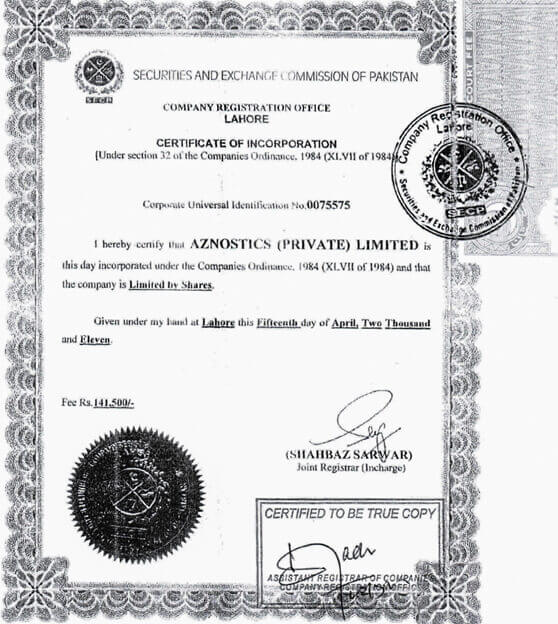
The Diagnostic Center. Aznostics private Limited is a company dedicated to providing high quality and ethical radiology and pathology diagnostics services. Established in 2011, it has in a short time developed a reputation for providing excellent consultative and investigative services and has opened satellite branches in Lahore, Gujranwala and Sialkot. We have a full range of radiology and pathology services.
We are a group of leading physicians most of whom have trained overseas and held teaching and research appointments Aznostics has a special interest in the diagnosis and treatment of hepatocellular carcinoma in particular. We hold a weekly tumor board meeting for this and are heavily involved in a charitable low cost hepatitis screening and treatment program. We are a socially responsible group and take part in many health related initiatives including blood camps, anti-smoking campaigns and hepatitis awareness.
Our laboratories are furnished with state of the art equipment and instruments, according to the most recent advancements in international laboratory and radiology industries. Combined with modern information systems, we can confidently identify our patients through digital bar-coding techniques and are able to track and monitor all tests accurately and efficiently. Our reports are available online and can be accessed from anywhere.

The combined experience of our management teams, help our clients to interact and discuss any enquiries they may have about the laboratory or radiology services provided by the Diagnostics center Network.
Working as one highly efficient team, our supporting departments are confident in providing the highest quality services throughout the Pakistan. Our clinical management teams are professional, highly qualified scientists that have vast experience in the field of medicine, clinical pathology and information technology. Such a formidable combination of scientific and managerial expertise, allow us to assist our referring doctors and clinicians.
Innova is a name of Quality and Care. We guarantee excellent facilities, provided by a team of highly qualified doctors and specialists in a very compassionate, comfortable yet professional ambiance.
With its state-of-the-art technology, Innova offers outstanding services in areas of Endocrinology, Hematology, Clinical Pathology, Molecular Biology, Microbiology and Histopathology. In addition to our diagnostic services, our esteemed clients enjoy our luxurious customers services by having an easy access to their reports via web-based reporting, free urgent reporting, SMS reporting services, WhatsApp reporting on request. Last but not the least, we also provide “Free” home sample collection services. Stay connected and enjoy our constantly evolving innovative services.

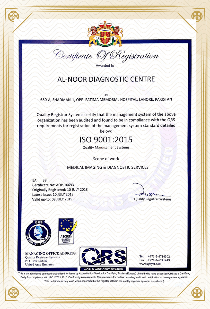
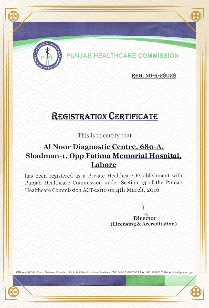
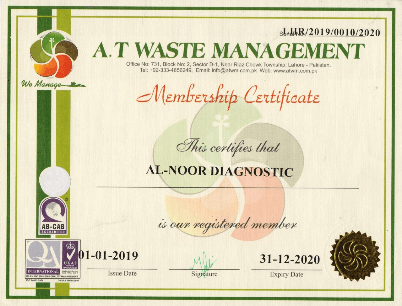
Established in 1984 in Lahore, Al-Noor Diagnostic Centre (ANDC) has been constantly facilitating the nation in the field of diagnostic services. Being a three storied building, which is situated in the heart of Lahore (Shadman), ANDC aims to provide diagnostic facilities along with other medical services under one roof. All the diagnostic facilities are supervised by the leading, highly experienced medical professionals. We guarantee quality healthcare services for your relevant medical conditions. ANDC is fully equipped with multiple high-end sophisticated ultrasound machines, 128 slice MDCT which is also capable of performing cardiac CT, MRI, fluoroscopic machine, CR system, mammography, OPG, CBCT and DEXA scan. ANDC has developed its reputation with state-of-the-art equipment and by providing outstanding, accurate / precise diagnostic services.
Citi Lab and Research Centre was established in 1986. The lab is facilitating superior quality diagnostics services to its customers through a very e!cient network of labs and collection points. We use fully automated instruments for lab tests with best accuracy and precision. This enables the lab to report test results quickly without ever compromising on quality. It is because of this reputation of uncompromising quality and quick reporting time that is the reference lab of choice for multiple hospitals and labs.
Citi lab and Research Centre has an extended nationwide network of laboratory collection centers running under strict guidelines and standard operating procedures to ensure provision of quality testing services to people all over Pakistan. An advanced patient data management system is available where test results are saved within the labs Information System, an in-house built software system, and can be easily accessed online.

Lab one was incorporated in the year 2003 by Prof. Dr. Javed Asif and Mr. Mumtaz Khan. Since then Lab One continued to facilitate patient care by providing high quality, cost effective and certified laboratory testing to patients and referring centers all over Pakistan. Lab One is one of the leading state-of the-art laboratory in Lahore and serves a critical role in the health care perpetuity. We offer reliable test and efficient delivery of reports providing quality health care. Lab One aims not to earn but to serve the patients with its best resources and abilities.